Buying a second home in Switzerland
Reading time — 9 minutes
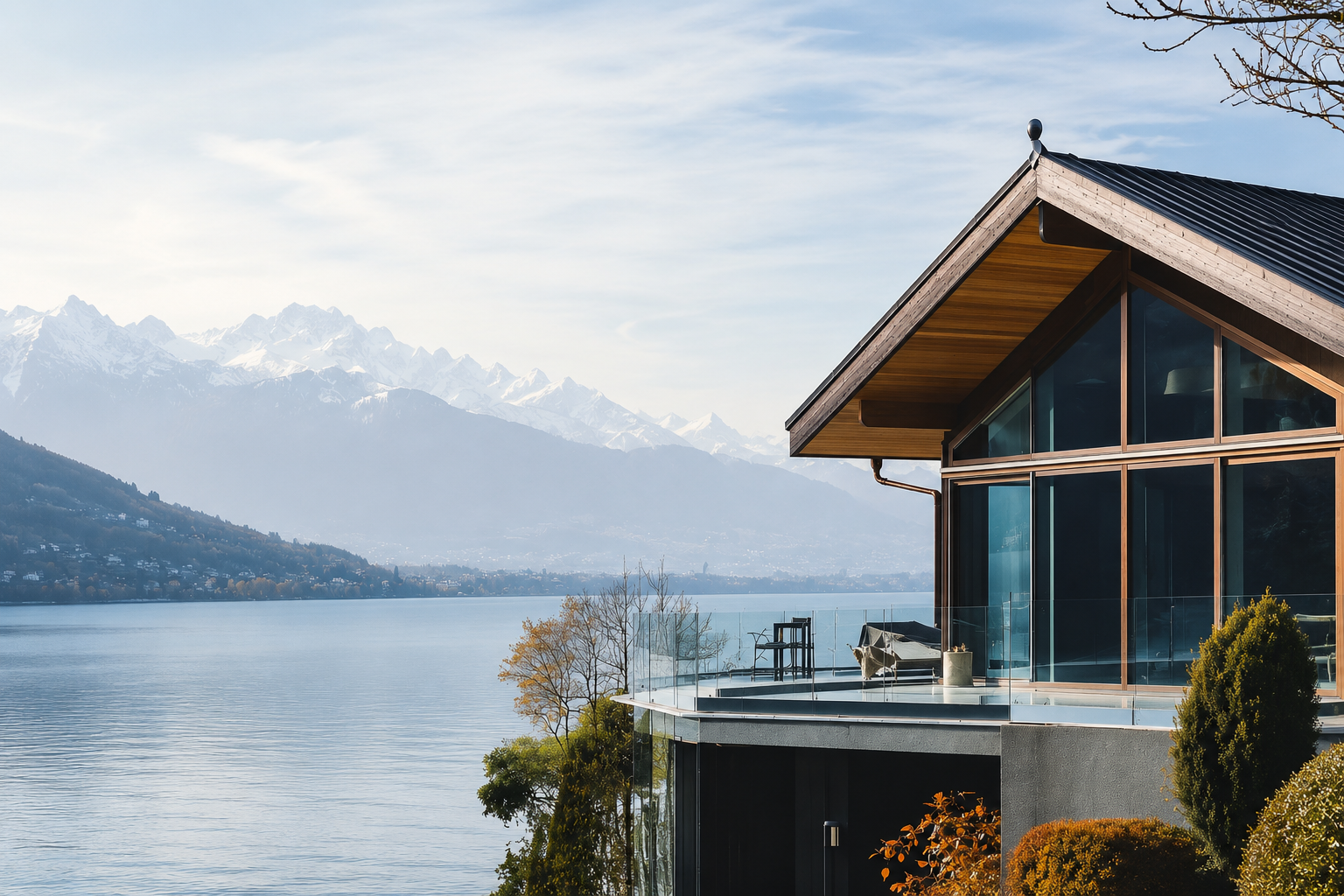
For a wealthy international clientele, Switzerland represents a genuine philosophy of wealth management that goes beyond the concept of a mere destination. Whether a chalet on the outskirts of Verbier, a villa overlooking Lake Geneva, or a luxury appartment in Geneva: each purchase reflects both a long-term vision and a way of life. But this market, precisely because it is exclusive and protected, is subject to a regulatory and tax framework of such rigour that few other countries apply it with such consistency. Understanding this is the first step towards knowing how to enter it.
- A second home in Switzerland is a property occupied only occasionally, and is subject to the federal LRS Act (Lex Weber), which safeguards territorial balance.
- The Lex Koller Act regulates property purchases by foreign nationals according to their status: C permit (unrestricted), B permit (authorisation required), cross-border workers (purchase permitted without a tenancy agreement), and non-residents (strict authorisation required).
- The quota of 20 per cent per municipality and 1,500 annual sales to foreign buyers severely limit the prospects in certain regions.
- Non-residents are subject to the following restrictions : tourist zone, a maximum of 200 m² of living space, 1,000 m² of land, a connection to the region, and a ban on year-round letting.
- The tax system treats the rental value as notional income and subjects it to wealth tax, with no tax relief for second homes.
- Capital gains tax decreases the longer the asset is held. A quick sale may result in an additional tax charge for speculation.
- Banks require a deposit of 35–40 per cent and a debt-to-income ratio of less than 33 per cent, although conditions may vary depending on the market: in sought-after resorts such as Verbier, more favourable terms can sometimes be negotiated.
- Please note: notary fees, stamp duty and annual service charges.
- Location suitable for the intended use; local authority quota to be checked; property in excellent condition; long-term ownership preferred.
The benefits of a second home in Switzerland
Owning a second home in Switzerland provides access to an exceptional quality of life. Safety, excellent infrastructure and beautiful landscapes combine to create a unique environment where many aspirations come together. Swiss property also enjoys a reputation as a safe haven; the country’s political and economic stability makes it a sought-after investment, which fits naturally into a long-term strategy of passing assets down through the family.
What is a second home in Switzerland?
A second home is a property occupied on an occasional basis, in a different municipality from the main residence. Behind this seemingly innocuous definition, however, lie considerable legal and tax implications, which many buyers underestimate at the time of purchase. Unlike a main residence, which enjoys certain tax benefits, a second home is subject to the Federal Act on Second Homes (LRS), commonly known as the Lex Weber.
It should be noted that each property is individually registered in the land registry as a main or secondary residence, a status that can only be changed through a formal legal procedure. In mountain resorts in particular, this classification has a significant impact on the profile of potential buyers when the property is put up for sale: this is a factor to bear in mind from the outset.
This law requires the cantons to ensure that second homes do not jeopardise access to housing for permanent residents.
The regulatory framework: who is allowed to buy?
The Federal Act on the Transfer of Real Estate (LFAIE) (Lex Koller)
Any purchase of a second home in Switzerland by a foreign national is subject to the Lex Koller, a federal law designed to prevent Swiss territory from gradually passing into foreign hands. For European nationals, the conditions may vary significantly depending on their residence status.
Holders of a settlement permit (permit C) enjoy the same rights as Swiss citizens and do not require any prior authorisation. With a residence permit (permit B), there are no restrictions on purchasing a main residence, but any second home requires cantonal authorisation.
Cross-border workers holding a G permit may, subject to certain conditions, purchase a property near their place of work without requiring specific authorisation under the Lex Koller. This property does not constitute a second home in the traditional sense and may not be let out whilst the holder retains this status.
For people resident abroad, the rules are becoming considerably stricter: property purchases are subject to cantonal authorisation in certain tourist areas and are subject to available quotas
The restrictions under the LRS Act (Lex Weber)
The Lex Weber regulates the stock and construction of second homes at local authority level, whilst the Lex Koller sets out the rules on who may purchase them. These laws apply in a complementary and independent manner: compliance with one does not exempt one from the other.
Federal law imposes a strict quota: second homes may not account for more than 20 per cent of a municipality’s housing stock. In municipalities that have reached this threshold, the construction of new second homes is prohibited and options are limited to rebuilding.
In addition to this local restriction, there is a national cap on annual authorisations: the number granted each year to foreign buyers is limited and allocated amongst certain tourist cantons, notably Valais, Vaud, Graubünden, Ticino and Bern. The available quotas therefore vary by region and can be exhausted quickly in the most sought-after areas. Geneva and Zurich, which do not have designated tourist areas, issue very few authorisations for this type of purchase.
Specific conditions for non-residents
For people resident abroad, a number of strict criteria apply:
- Ownership of a single second home in Switzerland is permitted.
- The property must be situated in a tourist area.
- The living area may not exceed 200 m², and the plot area 1,000 m². In certain specific cases, two unmarried buyers may purchase twice this area if the property is legally divided. It is strongly recommended that you seek the assistance of a specialist.
- In principle,a foreign buyer must retain ownership of the property for a minimum of five years (unless special circumstances authorised by the canton apply).
- Annual lettings are generally subject to very strict regulations, or may even be prohibited, depending on the type of licence obtained and the classification of the property. Some holiday homes may be let on a seasonal basis, whilst others are even subject to a requirement to be let for tourist accommodation. The classification in the land register is therefore a decisive factor from the moment of purchase.
Thecantonal authorisation procedure
Authorisation must be obtained from the relevant cantonal authority, to which a complete application must be submitted: passport or residence permit, sales contract, plans of the property, and proof of funding. Processing can take several weeks or even several months, and the authorisation remains valid for three years. It should be noted that the conditions for granting authorisation vary from canton to canton, with some interpreting the eligibility criteria more strictly than others.
Taxation of second homes in Switzerland
Applicable taxes and duties
Under Swiss law, a second home is regarded as a luxury asset with no specific tax advantages: it forms part of the owner’s taxable assets, according to a scale that varies from canton to canton.
The Swiss tax system taxes the imputed rental value, which is a notional income corresponding to the theoretical rent that the property could generate (and which is taxable as income even if the property is only occupied for a few weeks a year).
In the case of a short-term let, the actual rental income must be declared. Although it is a subject of regular political debate, the notional rental value remains applicable in Switzerland at present.
Capital gains tax on property
The resale triggers a capital gains tax on any profit made, the rate of which is directly linked to the length of ownership: the longer the period of ownership, the lower the tax liability. A quick resale exposes the owner to a high tax rate and the risk of an additional charge for speculation. Renovation costs are tax-deductible, provided you keep all supporting documents.
Spreading maintenance work over time can also help to mitigate the progressive nature of taxation: an optimisation strategy that is best planned in advance. Mortgage interest remains deductible from taxable income, although the high level of personal contribution required automatically limits its scope.
Financing your second home
Financing capacity is often the primary criterion for feasibility, even before tax considerations.
Mortgage terms and conditions
A mortgage is the most common form of financing. Banks require a minimum deposit of 35 to 40 per cent of the purchase price, compared with 20 per cent for a main residence. Part of the sum may come from the second pillar (LPP), with tax implications and an impact on pension provision that should be taken into account. The maximum debt-to-income ratio, meanwhile, must not exceed 33 per cent of gross income.
Costs to expect
Acquisition costs
The purchase price represents only part of the total budget. Notary fees, calculated as a percentage of the sale price, vary from canton to canton and are generally shared between the buyer and the seller. Transfer duties, for example, amount to 3 per cent in Geneva, with significant variations across the cantons.
Annual charges
Service charges can be substantial in luxury residential complexes. Heating costs (which can rise sharply at higher altitudes), maintenance of outdoor areas, and cleaning of communal areas all add up to a budget that is often underestimated. Compulsory insurance (third-party liability, property damage) is calculated based on the value of the property. Entrusting management to a specialist company may be a wise move for owners living abroad.
How do you choose the right second home?
Key criteria
Choosing a location requires careful consideration of how the property will actually be used: seasonal demand, accessibility from one’s main residence, and future resale value. For winter sports enthusiasts, our luxury chalets in Verbier, Crans-Montana and Gstaad represent markets with very different dynamics, each catering to a distinct buyer profile. The shores of Lake Geneva, meanwhile, appeal to those who prefer to stay there more regularly, nestled between the lake and the vineyards.
Resale value deserves particular attention: accessible, well-connected sites retain their appeal regardless of market cycles.
Opting for a property in excellent condition helps to avoid unexpected renovation work that could put a strain on the budget. As the Swiss tax system clearly favours long-term ownership, the ability to plan for several decades remains a selection criterion in its own right.
Guide prices
Once the criteria have been established, the question of cost naturally arises, given that prices vary considerably from region to region. Among Switzerland’s major cities, Zurich and Geneva lead the way, followed by Lausanne, Basel and Bern. Alpine resorts such as Verbier, Crans-Montana and Gstaad command prices that reflect their international standing.
Discover our selection of properties in Switzerland and benefit from the support of our advisers in identifying properties that meet your criteria, whilst taking into account the regulatory requirements specific to your profile.
Support from an expert
The regulatory and tax complexities involved in purchasing property in Switzerland make it essential to seek guidance from experienced professionals. FGP Swiss & Alps is familiar with the specific features of each canton and guides you towards properties that are genuinely within your reach, carefully selected to match your profile. This personalised support covers every stage, from applying for cantonal authorisation to signing the deed.
Discretion is essential in the luxury property sector. Our services include the exclusive selection of properties, the organisation of private viewings, advice on financing and, if required, rental management.
If you are also considering selling your current property or would like to have your property valued, FGP Swiss & Alps’ expertise covers all your property needs.
Points to bear in mind
Maintenance costs, service charges and taxes represent a significant budget that needs to be planned for in the long term. Managing a property remotely presents practical challenges that need to be organised in advance, ideally with the support of a specialist company. A property used strictly as a second home cannot generally be let on a year-round basis, unlike a holiday home that is registered for tourist lets.
Frequently Asked Questions
As a European national, am I free to buy a second home in Switzerland?
It all depends on your residence status. A C permit gives you the same rights as a Swiss citizen. A B permit or a main residence abroad requires authorisation from the canton.
What personal financial contribution is required to buy a second home in Switzerland?
Banks require 35 to 40% of the purchase price for a second home.
Can I rent out my secondary residence?
A holiday home can be let on a short-term basis. A property designated strictly as a second home cannot generally be let on a year-round basis.
How long should you hold onto the property to minimise your tax liability?
The longer the holding period, the lower the capital gains tax. A quick resale results in a high tax rate and the risk of an additional charge for speculation.
Which cantons are most open to foreign buyers?
The conditions for granting authorisations vary from canton to canton. Geneva and Zurich are extremely restrictive and offer virtually no opportunities for foreign buyers, due to a lack of designated tourist areas and available authorisations. Other cantons, such as Valais, Vaud and Graubünden, remain accessible subject to certain conditions.
Discover similar articles
Buying off-plan: How do you buy a property that has not yet been built?

How to choose a prestige real estate agency in Switzerland
How do you become a homeowner in Switzerland without equity capital?

Property taxation in Switzerland: key principles, regulatory developments and best practice